

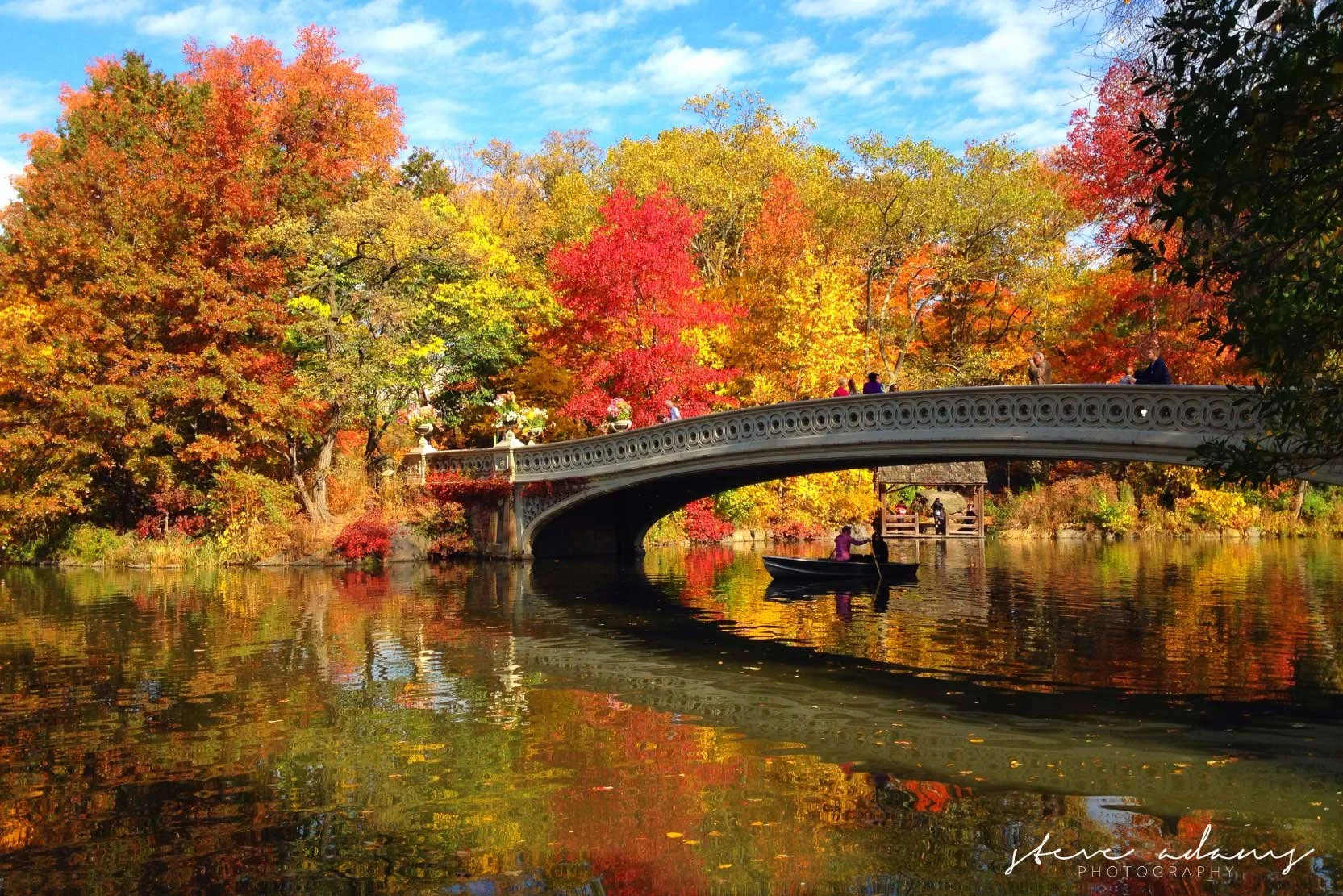
I lived in New York for five years, and in that time I made it a point to see every corner of all five boroughs, not just the postcard parts of Manhattan everyone photographs. But even after five years of walking those streets in every season, autumn was the one that always caught me off guard. I wasn't prepared for how a place that loud, that fast, that relentlessly alive could also feel so soft around the edges for a few weeks every year.
I remember walking through Central Park on one of those October afternoons where the light hits just right, low and golden, cutting through branches that were somewhere between green and gold and red all at once. There were people everywhere, the way there always are in that park, but for a moment it felt like the whole city had agreed to slow down together. Someone was reading on a bench. A couple was taking engagement photos by the lake. A guy was walking his dog so slowly it looked like even the dog knew something special was happening. I remember standing there thinking, this is a completely different city than the one I thought I knew, even after living here for years already.
That's the thing about autumn in New York. Most people picture the skyline, the yellow cabs, the noise. And all of that is still there, don't get me wrong. But for a few weeks in October and November, the city hands you something softer underneath all of that energy, if you know where to look for it and you're willing to slow down enough to actually see it.
Here's what I've learned about photographing it, after five years of chasing this season through every part of the city.
Time your trip for early to mid November
If there's one piece of advice I'd put above all the others in this post, it's this one. New York's peak fall color tends to land in that window of early to mid November, later than a lot of visitors expect. People show up in late September or early October assuming they'll catch the city dressed in orange and red, and instead they find a lot of trees still holding onto summer green.
The city warms up more than you'd think being surrounded by concrete and traffic and packed together the way it is, so the leaves take their time turning compared to the countryside just a couple hours outside it. In my five years there, the most consistent, most vivid color always showed up in that first half of November, right before the trees started dropping everything and going bare for the season. Plan your trip around that window if color is the whole point of the visit, and you'll save yourself the disappointment of showing up a few weeks too early.
Go to the park early, before the crowds catch up to you
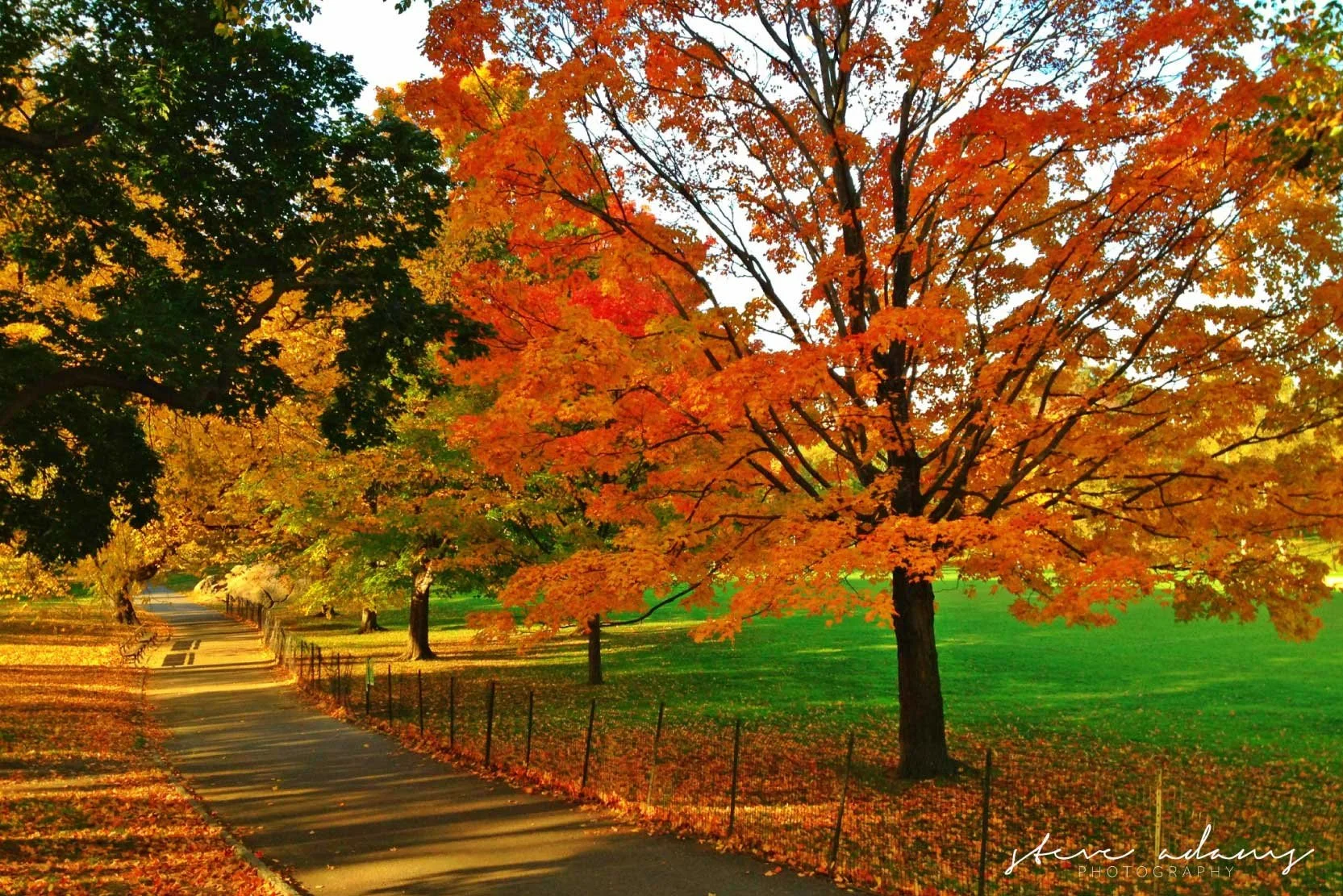
Central Park is the obvious place to start, and for good reason. Out of every park in every city I've ever photographed, Central Park in autumn might genuinely be a photographer's dream. But it gets busy fast once the leaves really turn, especially on weekends when everyone in the city seems to have the same idea you did. Get there early, right around sunrise if you can manage it. The light is softer, the paths are quieter, and you'll have a much easier time finding a composition that doesn't have twelve strangers wandering through your frame.
The Mall, with its long row of American elms, is one of my favorite spots in the whole park in the fall. Those trees form this natural golden tunnel overhead, and in the early morning light it looks like something out of a painting rather than a real place sitting in the middle of Manhattan.
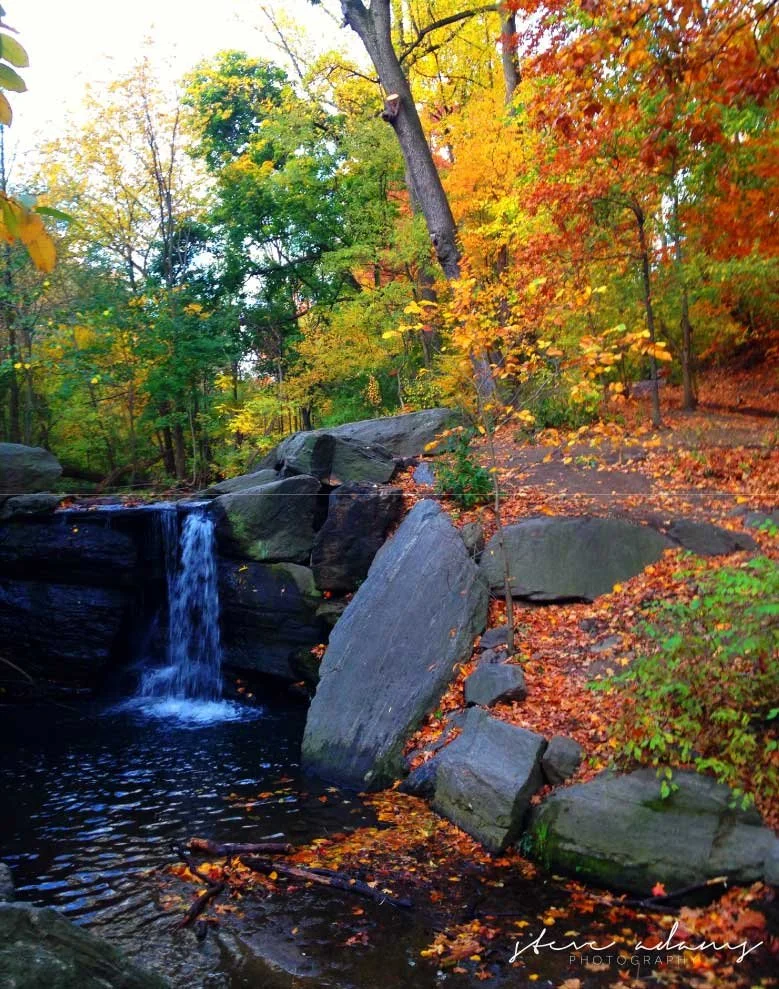
Wear real walking shoes for this one, especially if you're heading up toward the North Woods. That part of the park is hillier and rougher than most visitors expect, closer to hiking terrain than a stroll through the Mall, and some of the best, least photographed fall color in the whole park is tucked up there.
Shoot the color and shoot the city wearing them
It's easy to get so focused on the foliage itself that you forget you're standing in one of the most photographed cities in the world. Some of my favorite shots from fall in New York aren't just close ups of leaves. They're wider frames where you can see a few orange trees in the foreground and a slice of the skyline or a row of brownstones sitting right behind them.
That contrast, something as old and natural as changing leaves set against steel and glass and stone, is really the whole story of autumn in this city. It's what makes it different from fall anywhere else I've photographed. And you don't need a park to find it. Some of my favorite fall frames from those five years weren't taken in a park at all. They were taken looking straight down an avenue with the light catching a row of trees against glass and steel.
Chase the light through the buildings
New York has this thing that happens in the late afternoon during fall where the sun drops low enough that it starts cutting sideways down the avenues, catching windows and slicing between buildings in these long, dramatic beams. Add a few golden trees into that same frame and you've got something special. Keep an eye on where the light is coming from as you move through the day, not just what's directly in front of you. Sometimes the best light of the whole afternoon is bouncing off a building two blocks away from where you're currently standing.
Honestly, sun is the single most critical piece of this whole equation. Fall foliage on an overcast day still looks nice, but it doesn't glow the way it does when direct sunlight is passing through the leaves instead of just sitting on top of them. Check the forecast, plan your shoot around a sunny window if you can, and treat cloudy days as your rainy day backup plan instead of your main plan.
Slow down your shutter for stillness and motion at the same time
This is a technique I picked up over those five years that I still use constantly. If you slow your shutter speed down, just enough, a still tree holds perfectly sharp while people walking through the frame blur slightly as they move. It's a small technical trick, but it does something powerful. It captures the contrast between the stillness of nature and the constant motion of the city at the same time, in the same frame, which is really the whole feeling of autumn in New York in one photograph.
You'll need a tripod or something steady to brace against for this one, since a slow shutter means any shake in your own hands will blur the parts of the image you actually want sharp. But once you get the balance right, it's one of the most New York specific techniques you can use.
Get outside the park, and outside Manhattan
Central Park deserves the attention it gets, but don't let it be the only place you photograph, and don't let Manhattan be the only borough you visit. After five years of covering all five, I can tell you the best fall color isn't only sitting inside the park everyone already knows about. Some of my favorite fall shots in the city came from wandering through the West Village, where smaller trees line quiet residential streets and there's nobody else around competing for the same angle. Riverside Park along the water is another one that people tend to skip in favor of Central Park, and honestly, I think that works in your favor if you go there instead.
Cross into Brooklyn and Prospect Park gives you almost the same magic as Central Park with a fraction of the crowds. The Bronx has the New York Botanical Garden, which turns into an absolute masterpiece of color every fall. Even Staten Island, the borough most visitors skip entirely, has quiet residential streets lined with trees that most photographers never bother to see.
Even a single tree on a random side street, dropping leaves onto a stoop or a parked car, can end up being one of your favorite images from the whole trip. You don't need the famous spot every time.
Shoot after it rains
This one surprises people, but a rainy fall day in New York can actually be one of the best times to photograph. Wet pavement holds reflections of colorful trees and city lights in a way dry pavement never will. The colors of the leaves look richer and more saturated when they're wet too. Bring something to protect your gear, throw on a jacket, and go out anyway instead of waiting for the sun to come back out.
Include people in the frame
New York in the fall isn't just about the leaves. It's about the way an entire city full of people reacts to a few weeks of beautiful weather before winter sets in. Someone walking a dog through a pile of leaves. A group of friends taking photos under the same tree you're photographing. A street vendor selling roasted chestnuts, which honestly might be the most autumn smell that exists anywhere.
Don't be afraid to let people wander into your frame. They give the photo a sense of scale and life that an empty park path just doesn't have, and years from now, those small human moments are often what you'll remember most clearly.
Look for color where you don't expect it
Everyone photographs the obvious spots, the big sweeping trees in Central Park, the postcard views. But New York has pockets of fall color tucked away in places most visitors never think to look. A community garden in the East Village. A row of trees outside a brownstone in Brooklyn Heights. The ivy climbing up the side of an old building, turning deep red as the weather cools.
Keep your eyes open as you're walking between the places you actually planned to visit. Some of the best shots happen in those in between moments, not the ones you scheduled ahead of time.
Look high and low, not just straight ahead
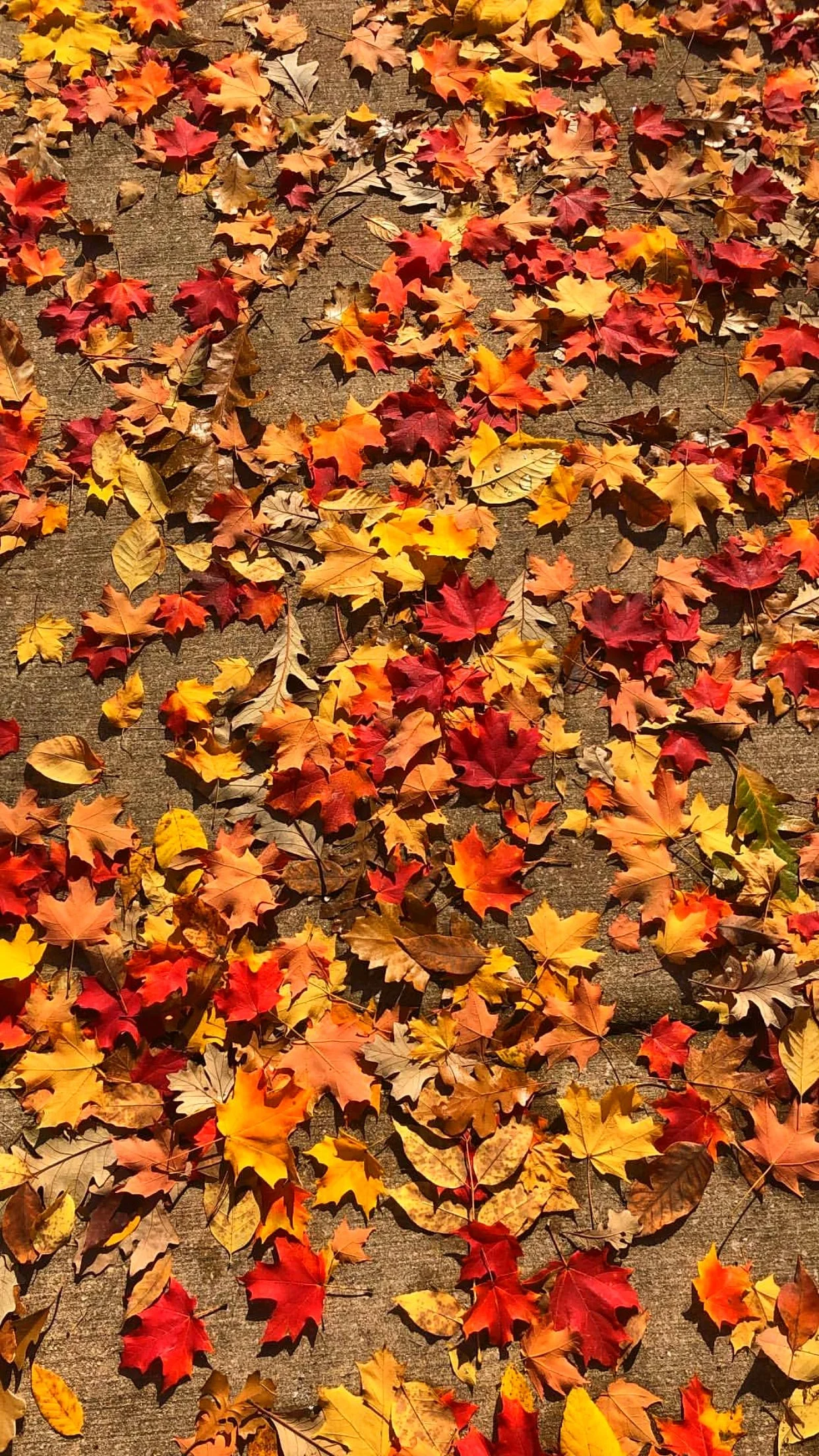
It's easy to get locked into photographing everything at eye level, especially in a city built to constantly pull your attention upward toward the skyline. Don't forget to look down too. A carpet of fallen leaves on a sidewalk or a park path is just as stunning as the tree it fell from, sometimes more so, especially after a light rain when the colors deepen and the wet pavement adds a little shine underneath them. Some of my favorite fall images from New York are just leaves on the ground, no tree, no skyline, nothing else in the frame at all.
Keep an eye out for wildlife too
New York isn't the first place people think of for wildlife photography, but fall brings a noticeable shift in the animals moving through the city too, not just the leaves. Squirrels going into overdrive collecting food for winter. Migrating birds passing through Central Park, which happens to sit directly along a major migratory flyway. Even the pigeons and city birds seem to move differently once the weather turns. Keep your camera ready!
Keep an eye out for wildlife too
New York isn't the first place people think of for wildlife photography, but fall brings a noticeable shift in the animals moving through the city too, not just the leaves. Squirrels going into overdrive collecting food for winter. Migrating birds passing through Central Park, which happens to sit directly along a major migratory flyway. Even the pigeons and city birds seem to move differently once the weather turns. Keep your camera ready for this the same way you would for a tree changing color. It's a smaller detail most people miss entirely, but it adds another layer to the story of the season that a park full of orange trees alone doesn't tell on its own.
Don't overlook golden hour and reflections
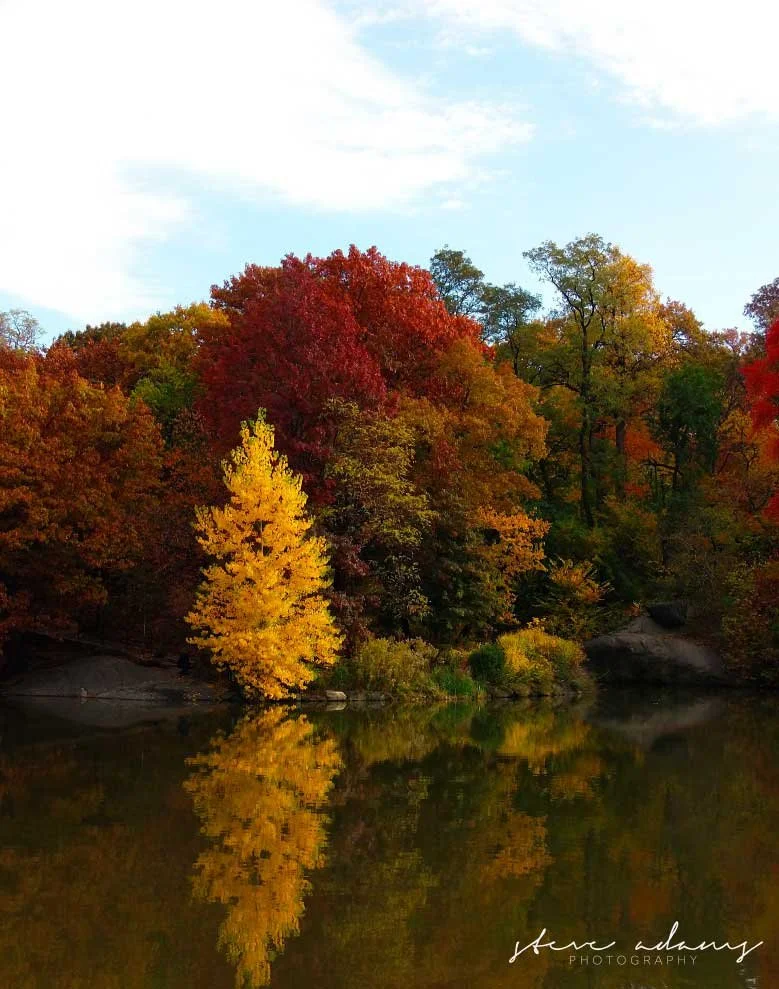
The lake in Central Park, the ponds scattered throughout, even the Hudson if you're out that way, all of it becomes a mirror during that late afternoon golden hour. A tree in full color reflected in still water doubles the impact of the shot without you having to do anything except show up at the right time and find the right angle. Get low to the water's edge if you can. It changes the whole composition and pulls you into that reflection instead of just looking down at it from above.
Bring your patience
I know I say this in almost everything I write, but it matters here just as much as anywhere else I've photographed. New York moves fast. It's easy to feel like you need to keep up with it, snapping quick photos as you rush from one spot to the next trying to see everything in a single afternoon. Resist that.
Pick a few spots, and actually spend time in them. Watch how the light shifts over twenty or thirty minutes. Notice which direction people are walking and let a scene build itself in front of you instead of chasing after it. Some of my best photographs from that first trip came from just sitting on one bench in Central Park longer than felt necessary, watching the same small patch of the park change in front of me as the light moved.
Let yourself enjoy it, not just document it
I'll end with this, because it's easy to forget in a city that gives you so much to point a camera at. Put the camera down every once in a while. Get a coffee and just walk. Sit on a bench without documenting the moment for a few minutes and just let it be what it is.
Autumn only lasts a few short weeks in New York before the trees go bare and the wind turns properly cold. It's a small, fleeting window in a city that rarely slows down for anything. Even after five years of living there and chasing this season through every borough I could reach, it never once got old. If you're lucky enough to catch it, don't spend the whole time looking through a viewfinder. Look up every so often and actually take it in. The photographs will be better for it, and so will you.
